Regenerative
PRP for face and scalp
Platelet-rich plasma from your own blood, used to support thinning hair and improve skin quality.
At a glance
Treatment time
45 to 60 minutes
Downtime
Redness for about 24 hours
Results
Most see change from 12 weeks
Course
Usually recommended
Areas
Scalp, face and selected skin concerns
Consultation
Required
How it works
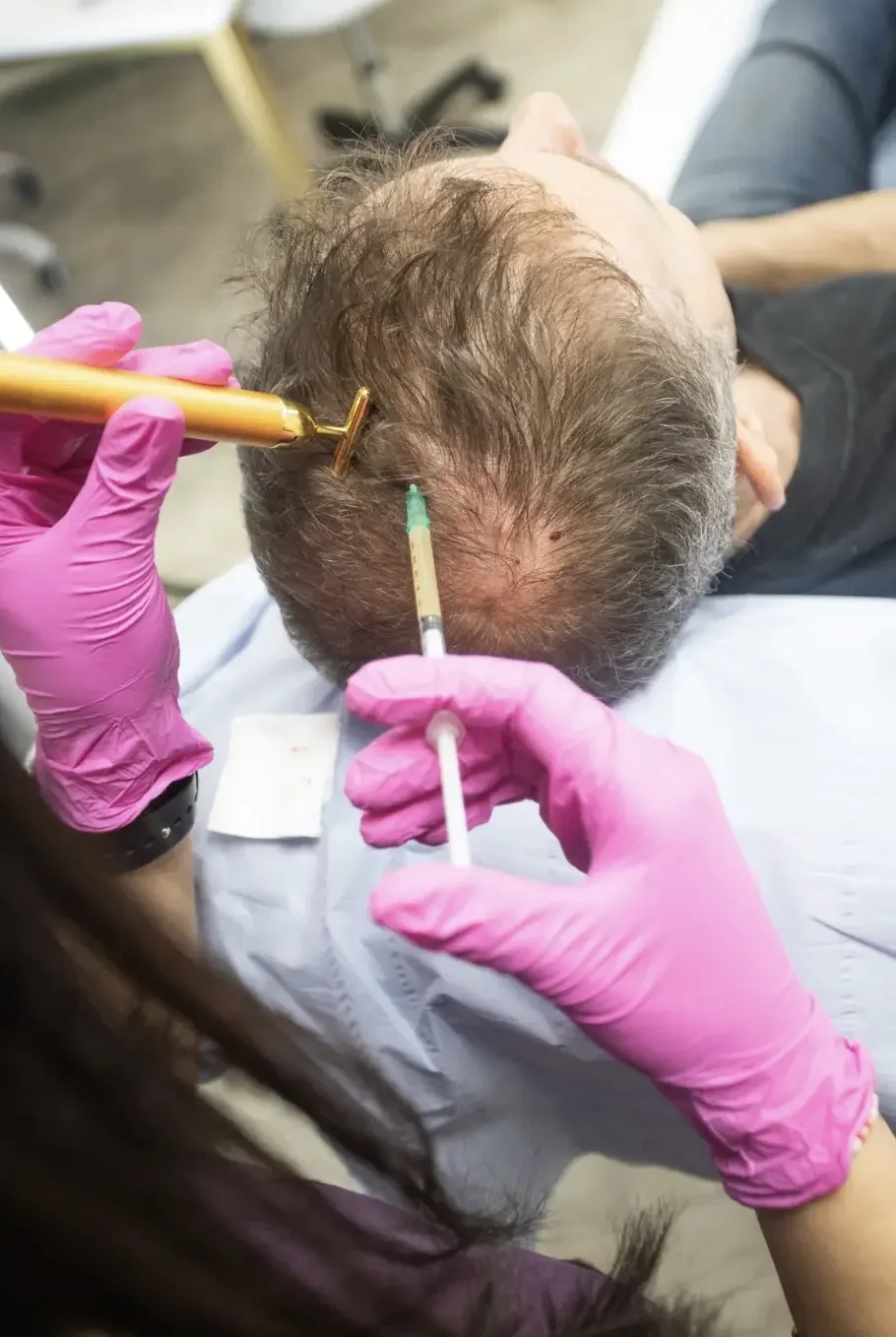
A small amount of your blood is spun in a centrifuge to concentrate the platelet-rich plasma, which is then injected into the treatment area. Platelets release signalling proteins involved in healing and tissue repair.
Hair shedding has many possible causes, including nutrition, thyroid, stress and medication, so blood tests may be advised before we start.
Assessment first
Hair loss is more than a scalp problem
Increased shedding can have many causes, so your assessment may look at:
Nutrition
Protein intake, restrictive diets and nutritional gaps can affect hair health.
Iron and ferritin
Low iron stores can play a part in increased shedding.
Thyroid function
Thyroid changes can alter hair growth and shedding.
Vitamin status
Vitamin D, B12, folate and other markers where relevant.
Hormonal health
Hormonal changes can drive certain patterns of hair loss.
Stress and lifestyle
Physical or emotional stress can disrupt the hair-growth cycle.
In depth
Everything you need to know
What is PRP?
PRP stands for platelet-rich plasma. Platelets are best known for blood clotting, but they also carry proteins and signalling molecules involved in the body’s natural repair.
We take a small amount of your blood and spin it in a centrifuge to separate and concentrate the platelet-rich plasma. This is then placed into the treatment area. Because it comes from your own blood, PRP is a well-established regenerative treatment.
PRP for hair loss
PRP can be injected into the scalp as part of a programme for certain types of thinning. It aims to support the environment around existing follicles and may improve growth and density in the right patients.
PRP cannot create new follicles. If a follicle is no longer active, it cannot be brought back, which is why assessing progressive thinning early is so valuable.
Finding the cause first
PRP is most often used for pattern hair loss (androgenetic alopecia), but shedding has many other causes: low iron, thyroid changes, hormones, stress, illness, medication, rapid weight loss, pregnancy, autoimmune conditions, traction and scalp conditions.
So we find out why your hair is thinning before deciding how to treat it, using an in-person assessment and, where useful, blood and genetic tests. We treat the person, not just the area of hair loss.
PRP vs exosomes for hair
PRP is made from your own blood and contains concentrated platelets and growth factors. Exosome treatments use laboratory-produced preparations of extracellular vesicles, and these vary widely between products.
The newest treatment is not automatically the best. The right choice depends on what is causing your hair loss and what your scalp needs.
PRP for skin rejuvenation
On the face and around the eyes, PRP uses your own platelet-derived factors to support the skin’s repair processes. It does not add volume like filler. Instead, it gradually improves skin quality, texture, fine lines and tired-looking skin.
PRP can be combined with microneedling, polynucleotides or skin boosters for a stronger regenerative effect.
Who it suits
- Selected types of hair thinning, including androgenetic alopecia
- Skin quality and texture
- Fine lines
- Dull, tired-looking skin
Good to know
- PRP supports existing follicles; it doesn't create new ones
- Not suitable with certain blood disorders, checked at consultation
- Can be combined with mesotherapy, polynucleotides or exosomes
Questions we're often asked
Does PRP regrow hair?
It may help well-selected patients, but regrowth isn’t guaranteed.
Do I need blood tests?
Not everyone. They help when your history suggests another cause.
Is it a vampire facial?
That’s an informal marketing name. We call it PRP skin treatment.
Is it safe?
It uses your own blood, but isn’t suitable for some blood disorders, which we check first.
Start with a consultation
Every treatment begins with a face-to-face assessment, so your plan is built around your skin, your health and your goals.