Medical
Hormonal acne treatment
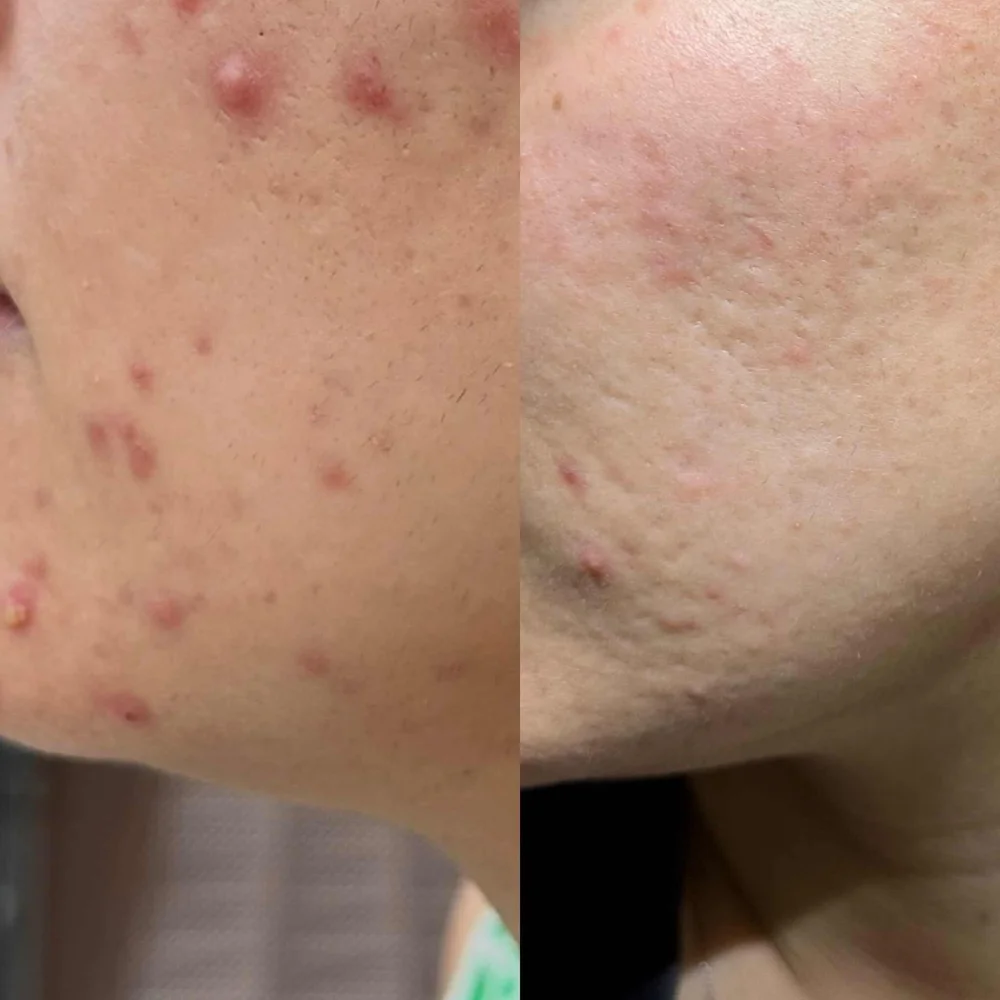
Hormonal acne is rarely solved by one product. We look at your skin, health and lifestyle together, then treat the cause and the marks it leaves.
At a glance
Best for
Hormonal and adult acne
Areas
Jawline, chin, cheeks, neck, chest, back
Assessment
Skin, health history and lifestyle
Investigations
Blood or genetic tests where needed
Downtime
Depends on the treatment
Progress
Reviewed over several weeks
Why it happens
Androgens can make the oil glands produce more sebum. Together with dead skin cells, this blocks pores and leads to inflammation. Stress, sleep, diet, genetics, medication and unsuitable skincare can all add to it.
Your plan may combine prescription-led skincare, chemical peels, HydraFacial and, once breakouts are controlled, microneedling for scarring.
Treatment options
Your treatment options
Your plan depends on whether your main concern is active acne, congestion, oil, pigmentation, scarring or a mix.
Chemical peels
Clear congestion, support renewal and fade post-acne pigmentation, chosen for your skin.
HydraFacial
Cleansing, gentle exfoliation and extraction for congested or oily skin.
Professional skincare
A simpler routine with the right ingredients, so you stop irritating your skin barrier.
Microneedling for scars
Once active acne is controlled, improves scarring, texture and skin quality.
Blood and genetic testing
Extra insight where your symptoms suggest an underlying cause.
In depth
Everything you need to know
Why does hormonal acne happen?
Hormones, especially androgens, can make the oil glands produce more oil. Combined with dead skin cells, this can block pores and lead to inflammation and breakouts.
Stress, sleep, diet, genetics, gut health, some medications and unsuitable skincare can also play a part. Breakouts on the jawline are often called hormonal, but location alone cannot confirm the cause, so we look beyond the spot itself.
Could there be an underlying cause?
Acne alongside irregular periods, extra facial or body hair, thinning scalp hair or other hormonal changes may need further investigation. Where appropriate, blood tests or acne genetic testing can help guide your plan.
If your symptoms suggest a hormonal or medical condition, or your acne needs prescription treatment, we will recommend you see a doctor or dermatologist.
Looking beyond the skin
Sleep, stress, nutrition, exercise and general wellbeing all influence skin health, and research into the gut-skin axis is growing.
That does not mean everyone with acne needs supplements or restrictive diets. We consider these factors where relevant, as part of a sensible, individual approach.
Active acne vs scarring
When acne is active, we focus on calming inflammation, congestion and new breakouts. Once it is under control, we look at what has been left behind.
Red or brown marks are not always scars. They may be post-inflammatory redness or pigmentation that can fade. True scars change the skin’s texture and may benefit from microneedling.
Who it suits
- Adult or hormonal breakouts
- Congestion and oily skin
- Post-acne redness and marks
- Acne scarring
When to see a doctor
- Severe, cystic, painful or rapidly worsening acne
- Acne that is scarring
- Acne with irregular periods, extra hair growth or scalp thinning
Questions we're often asked
Is my acne hormonal?
It often follows hormonal changes and the lower face, but appearance alone can’t confirm it.
Can it start in my 30s or 40s?
Yes. Menstrual and perimenopausal changes can contribute.
Do I need blood tests?
Not everyone. We use them where your history suggests it.
How long until it improves?
It varies. We review progress over several weeks and adjust the plan.
Start with a consultation
Every treatment begins with a face-to-face assessment, so your plan is built around your skin, your health and your goals.